Marion Epoxy Flooring brings more than 20 years of epoxy flooring work to Hiawatha, and on a production floor we judge every job by one plain test: does the surface stay in one piece? A coating that looks clean on handover day but starts to chip at a doorway, flake at a joint or dust along a cart route has stopped being a floor finish. In a building where loose particles are tracked and hunted, it has become a source of them.
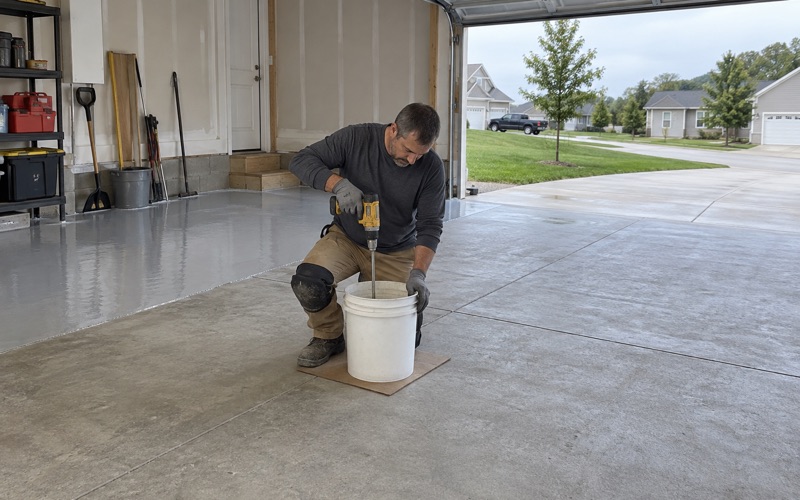
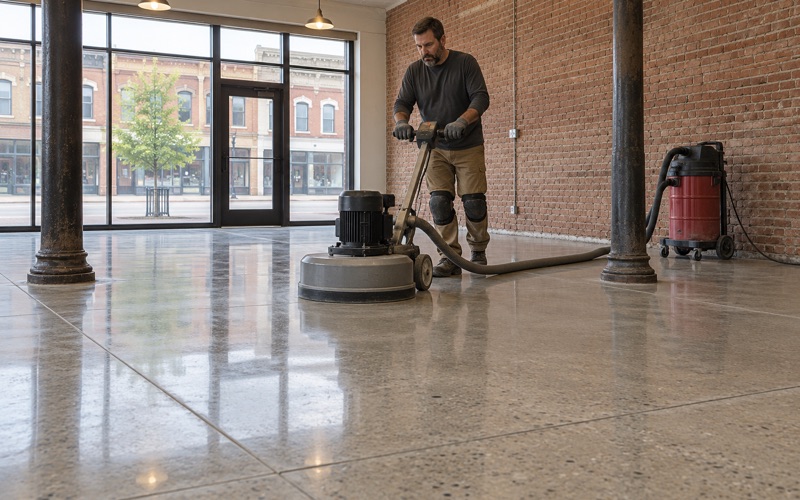
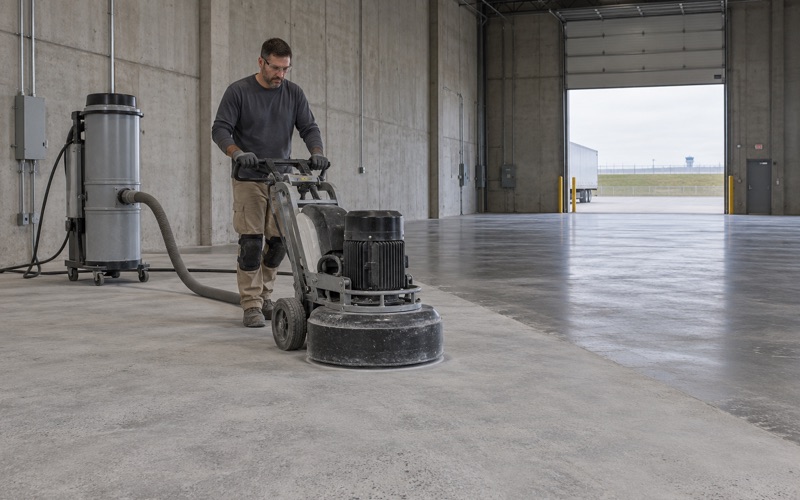
That is why our work starts with the slab rather than the color chart. We open the concrete with a diamond grinder or a shot blaster, never an acid etch, so the new coating bonds to a real profile instead of a skin that can let go. Before the price is final, the written scope includes a moisture test, and the proposal names the product line, the number of coats and the finished thickness, so a plant manager can check the installed floor against the quote.
Our paperwork also says Marion, Iowa, on every page. A search for Marion alone turns up Illinois, Ohio and Florida, and a purchasing department vetting a contractor deserves to know exactly who it is talking to.
Defense Electronics Built in Hiawatha, and Why Debris Matters There
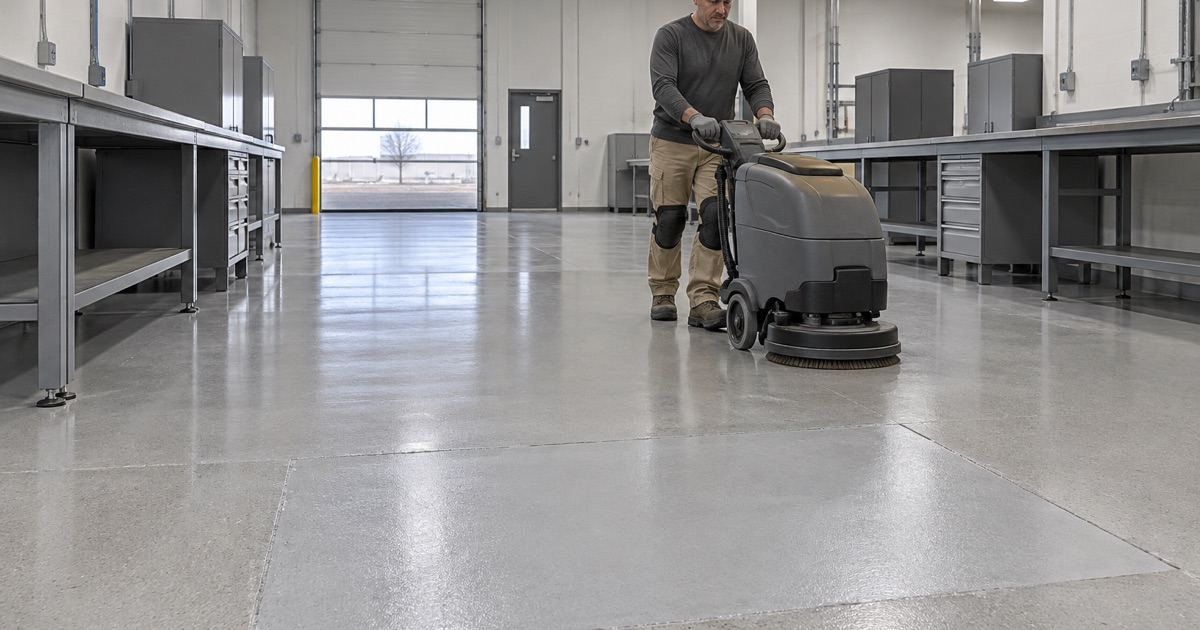
Most people think of floor coatings as a garage or warehouse purchase. In Hiawatha, part of the demand comes from something narrower: assembly areas where a stray fragment on the floor is treated as a quality problem, not a housekeeping one.
Crystal Group on Metzger Drive
Crystal Group is an employee-owned company founded in 1987 that designs and manufactures rugged servers, switches, displays, storage and embedded computers for defense, government and industrial customers. Its products are designed to meet military standards for shock, vibration and environment. In an April 24, 2017 release, the company announced a $17.5 million, 111,500-square-foot office and manufacturing location at 855 Metzger Drive in Hiawatha, and its current site states that it is ISO 9001:2015 and AS9100D certified.
We have no relationship with Crystal Group and have not seen its floors. We name it because it shows what kind of work happens in this city: defense electronics assembly under an aerospace quality system, and that kind of system changes how a floor should be thought about.
What foreign object debris prevention asks of a shop
AS9100 is the quality management standard used across aviation, space and defense supply chains. Boeing’s supplier quality page puts one requirement bluntly: AS9100 requires an organization to have provisions for the prevention, detection and removal of foreign objects. Boeing points its suppliers to separate program documents, AS9146 and NAS 412, for how a foreign object debris program is defined.
The page we read says nothing about floors, and we will not tell you a particular coating is required by any of those documents. Our point is practical. FOD programs exist to keep loose material out of products and work areas, and a floor that sheds chips, flakes or concrete dust under carts and dropped tools is producing exactly that loose material. A floor in that setting has one job above appearance: stay intact.
Looking for epoxy-flooring closer to Cedar Rapids? See Epoxy-Flooring Services in Cedar Rapids.
When the Floor Itself Becomes the Debris
A failing floor rarely fails all at once. It sheds in small pieces from predictable places, and each failure mode points to a different cause and a different fix.
Chipped and delaminated coating
Thin coatings rolled over a poorly prepared slab tend to fail at impact points first. A dropped wrench or a cart wheel striking a raised edge pops out a chip, and once an edge is open, traffic lifts more of it. When the coating peels in sheets rather than chips, the bond to the concrete was the problem from the start, often because the slab was acid etched or simply cleaned instead of mechanically profiled.
Flaking at joints, edges and thresholds
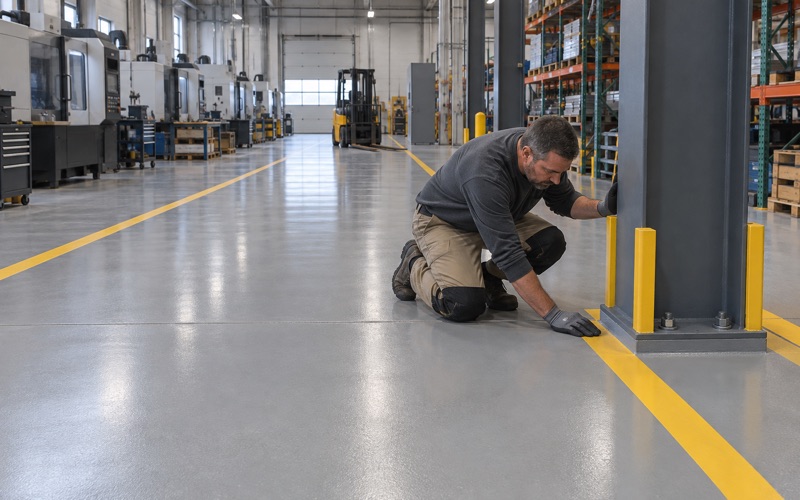
Control joints, slab edges and doorway thresholds take the hardest knocks in any shop. Coating that bridges a moving joint will crack along it, and the crack becomes a line of loose flakes. Thresholds where carts cross from one surface to another chip because the coating ends in a thin feathered edge with nothing behind it.
Dusting concrete under a worn finish
Where coating has worn through, bare concrete starts to dust under wheels and foot traffic. That fine gray powder spreads farther than chips ever will. Bare concrete that will stay uncoated can be hardened with a lithium silicate densifier, but in an assembly area we usually recommend restoring a continuous coated surface so there is no exposed slab to abrade.
Soft coating lifting under wheels
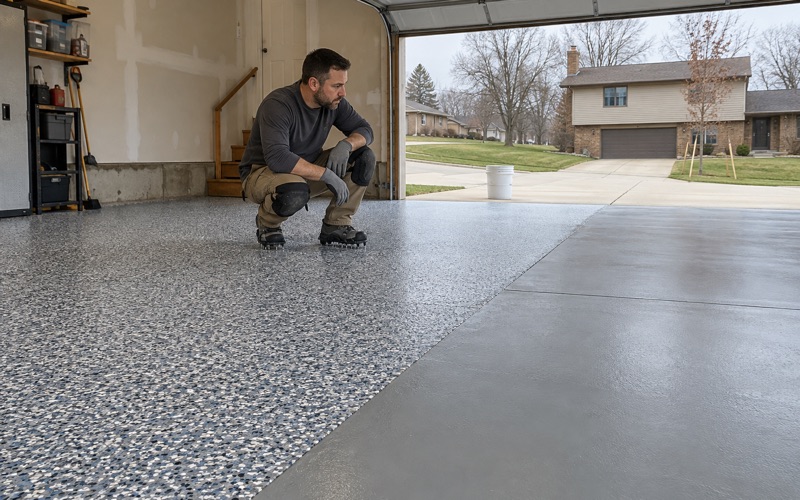
Some coatings never chip; they peel away under rolling loads. A finish that was too thin, was recoated over a contaminated surface or never reached full cure can soften under warm wheels and lift in strips, the same mechanism that causes hot tire pickup in a garage. On a shop floor the strips break into fragments that travel on casters from one room to the next, which is why we ask how a floor was installed before we decide whether to repair it or remove it.
None of this calls for a dramatic sales pitch. It calls for walking the floor, finding where the material is coming from and fixing those areas before the problem spreads.
Repairing Worn or Damaged Coating Before It Sheds
The cheapest repair is the one made while damage is still local. Waiting until a whole aisle is flaking usually turns a patch job into a full removal.
Mapping cracks, spalls and loose coating first
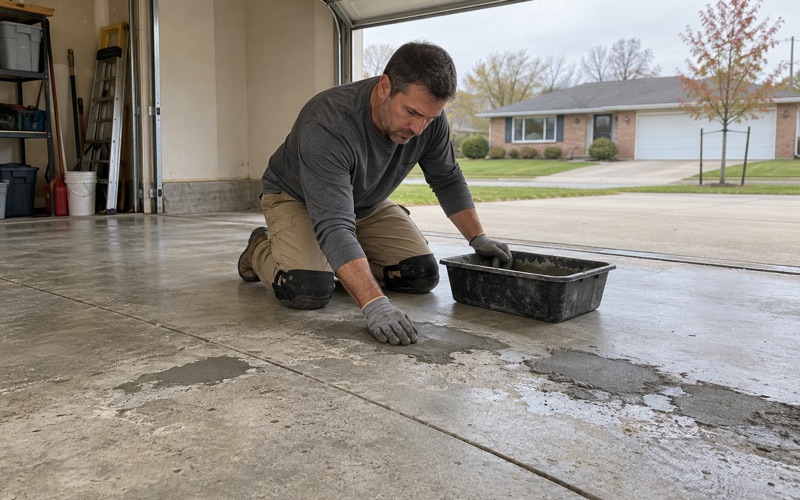
Before we price anything, we map cracks, spalls, hollow-sounding coating and old patches across the floor. Tapping a coated slab finds delamination that looks sound from standing height. If the concrete underneath needs repair, or a section of slab should be replaced before anyone coats it, we say so in writing rather than burying a weak substrate under fresh resin.
Grinding back to a sound, locked edge
Repairs fail when new coating meets old coating at a thin, feathered line. We grind out damaged areas to sound material and cut a defined edge so the repair has a full-thickness boundary to lock into. Spalls are filled with a repair mortar compatible with the coating system, and joints get a filler chosen to move with the slab instead of cracking out again.
The profile has to suit the system as well. A thin sealer needs only a light profile, while a thicker build needs a deeper one, so we match the ICRI concrete surface profile to the product rather than grinding every floor the same way. A profile that is too shallow for the build is one of the quiet reasons a new coating lets go early.
Matching the system to carts and dropped tools
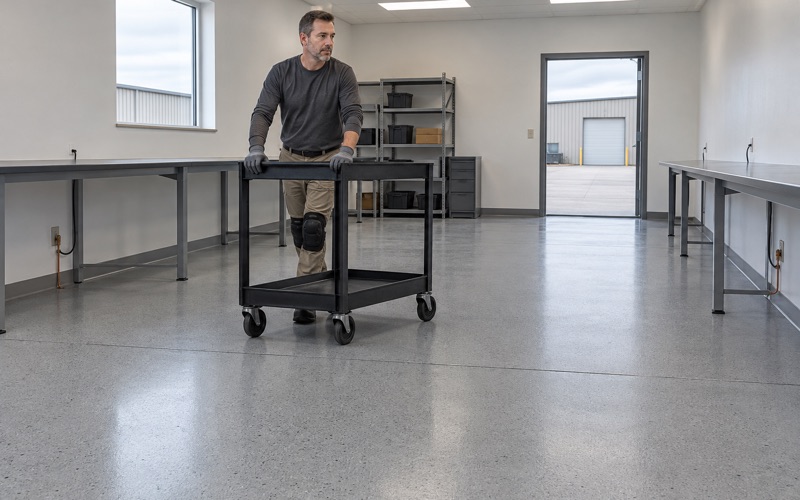
For production areas with rolling carts and occasional impacts, a 100% solids epoxy built to a stated thickness, finished with a polyaspartic or polyurea topcoat for wear, is a common choice. Areas with heavy wash-down or thermal exposure may call for urethane cement. Whichever system fits, the proposal lists the product line, coat count and finished thickness so the result can be measured rather than taken on faith.
Moisture is checked before any of it goes down. We use tests such as ASTM F2170 in-situ relative humidity probes or ASTM F1869 calcium chloride testing, because vapor pushing up through a slab is a leading reason coatings blister and lift. Moisture is also the first exclusion we explain when we talk about what a coating warranty does and does not cover.
Scheduling Floor Work Around a Controlled Build Area
Hiawatha is a Linn County suburb on the northwestern side of Cedar Rapids, and it counted 7,183 residents at the 2020 census, up from 6,480 in 2000. Plants here often cannot simply close for a week, and a controlled build area is the last place a flooring crew should improvise.
Phasing around shifts and production
We phase shop and plant floors around shifts, working in sections and using overnight and weekend windows when a line cannot stop. Each phase is planned so finished areas cure undisturbed while production continues elsewhere, and so traffic is rerouted before a section is opened rather than after.
If an area also carries floor marking for zones or walkways, we note where existing lines fall before grinding so they can be restored once the coating cures.
Walking the area with your quality team
Before the first phase starts, we walk the space with whoever owns the controlled area, usually a facilities lead and someone from quality. We agree on how each zone will be closed off, where equipment will be staged and how a finished section is cleaned and inspected before it goes back into service. That handover step matters as much as the coating itself, because an area returned to production with grinding residue in the corners undoes the purpose of the work.
Keeping our own dust out of your building
It would make little sense to fix a debris problem by creating a bigger one. Grinding dust is captured at the machine by a vacuum rather than swept or rinsed toward a floor drain or storm inlet, and work zones are separated from active areas. When we leave, the floor should be cleaner than we found it.
Cure schedules that follow the slab, not the calendar
Coatings cure by chemistry, and chemistry follows temperature. We watch slab temperature and the dew point spread at the surface, because condensation on a cold slab causes amine blush and weak adhesion. In a Linn County winter, an unheated space is told to wait, and a heated plant is scheduled so the slab and air stay in range through the full cure.
Building work in the city falls under the City of Hiawatha, which adopted updated model codes coordinated with surrounding jurisdictions effective January 1, 2022. When a flooring project is part of a larger renovation that needs permits, we coordinate with your general contractor so the floor fits the schedule they are working to.
- 20+ Years on Concrete
- Moisture Tested Before Pricing
- Free Written Estimates