Marion Epoxy Flooring installs polyaspartic floor coating systems in Marion, IA, serving surrounding cities including Hiawatha, Cedar Rapids, Mount Vernon, Stone City and Anamosa. Over 20+ years of coating concrete we have watched polyaspartic go from a specialty topcoat to one of the most requested floor systems, and we install it the same way we install everything else: on a diamond-ground slab, after a moisture test, with every layer named in writing.
Polyaspartic is a fast-curing aliphatic coating related to polyurea. It can be recoated within hours, it resists ultraviolet yellowing, and it tolerates a wider temperature range than most epoxies. Those traits make it popular for one-day garage floors and for commercial spaces that cannot close for long.
It is also one of the most oversold products in the trade. Claims that it is four or twenty times stronger than epoxy are common, and they can lead buyers to skip the preparation that actually decides whether a floor lasts. This page explains where polyaspartic earns its place, where it does not, and what we do to make it hold.
What Polyaspartic Does Well
Fast Cure and Short Downtime
The main reason people choose polyaspartic is speed. A base coat, broadcast and topcoat can often go down in one working day because each layer is ready to recoat in hours rather than overnight, and foot traffic can usually return the next day.
For a homeowner that means one day without the garage instead of several. For a business it can mean a floor refreshed over a weekend or between shifts, which is often worth more than any difference in material cost.
Ultraviolet Stability
Standard epoxy ambers when sunlight hits it, turning light colors yellow over time. Polyaspartic is aliphatic, which means it holds its color under ultraviolet light far better.
That matters in a garage that spends summer afternoons with the door open, in showrooms with large windows and in any space where a white or light gray floor needs to stay that color.
Wider Temperature Window
Polyaspartic can cure at lower temperatures than most epoxies, which extends the installation season in eastern Iowa into cooler spring and fall weeks.
It is not a cold-weather cure-all, though. Moisture condensing on a cold slab ruins the bond of any coating, so we still measure slab temperature and dew point spread before each coat, and a freezing unheated garage still waits.
Where the Strength Claims Go Wrong
Reading the Four-Times-Stronger Claim
The stronger-than-epoxy figures you see online usually come from a single test of a single property, often published by a company selling the polyaspartic. They do not mean the whole floor is four times tougher, and they say nothing about bonding to the concrete underneath.
Most coating failures we see are bond failures, not wear-through. A fast-curing topcoat rolled onto a poorly prepared slab will peel as quickly as anything else, and sometimes faster, because it shrinks and grips hard as it cures.
Fast Cure Means Less Forgiveness
Because polyaspartic cures quickly, it penetrates the concrete less than a slow epoxy primer and leaves the installer less time to correct a problem. Poor grinding, dust left on the slab or a damp spot all show up as bond failures.
That is why our systems often pair a penetrating epoxy primer or 100% solids epoxy base with a polyaspartic topcoat. The base does the gripping and building; the topcoat does the facing of sunlight, tires and chemicals.
Moisture Still Comes First
No topcoat solves moisture vapor pushing up through a slab. Garage slabs often sit on grade without a vapor retarder, so we test them with a plastic sheet, a calcium chloride kit or relative humidity probes before quoting.
When readings run high, a moisture-mitigation primer goes into the system. When they run very high, we say so and explain what the warranty would and would not cover.
Grinding Before Any Fast-Cure Coating
Every polyaspartic floor we install starts with a diamond grinder or shot blaster, never an acid etch. Grinding removes the weak cement paste, old sealers and oil-soaked concrete, and it leaves an open ICRI concrete surface profile that the primer can lock into.
A one-day floor puts more weight on that step, not less. With hours rather than days between coats, there is no second chance to fix a contaminated or glassy patch once the base is down, so the grind and the vacuuming afterward get the most time on install day.
Our Polyaspartic Floor Systems
Full-Broadcast Flake Garage Systems
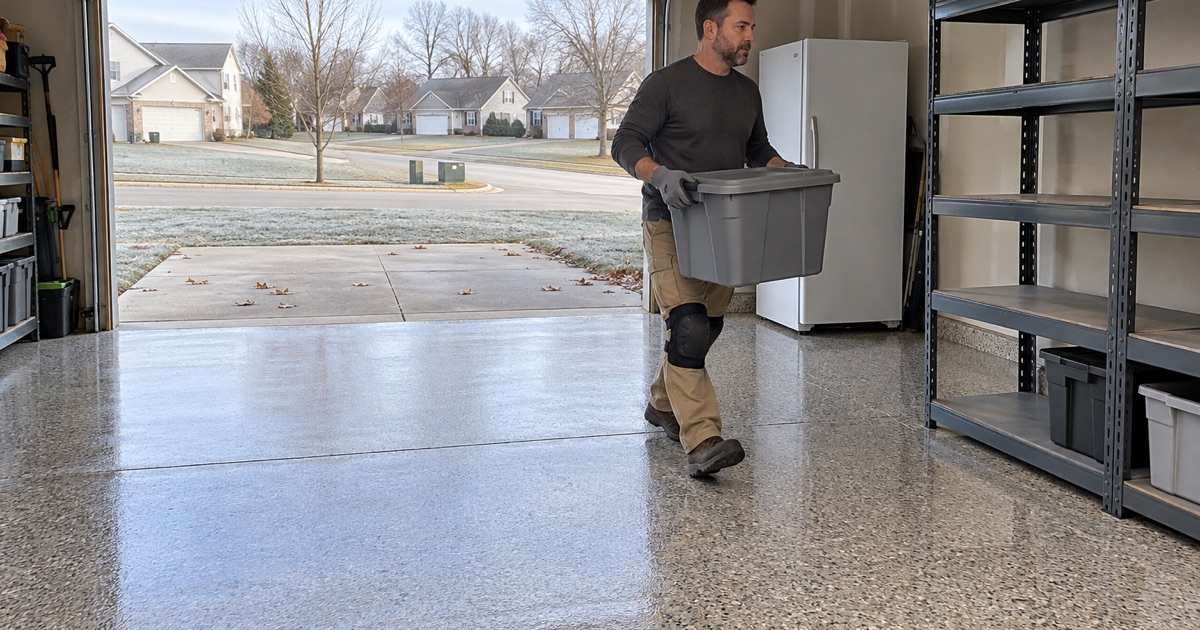
Our most common residential polyaspartic floor is a full-broadcast vinyl flake system: ground slab, repairs, base coat with flake broadcast to refusal, then a clear polyaspartic topcoat. The flake adds texture, hides small imperfections and gives the floor its color.
The proposal lists each product, the number of coats and the finished thickness, so you can check what went down against what you were quoted and compare our build with any other bid.
Quartz and Solid Color Systems
For commercial kitchens, locker rooms and service bays, a quartz aggregate broadcast under a polyaspartic topcoat provides texture and color in one build. Grain size and topcoat thickness decide the final grip, so we specify both to the space.
Solid color polyaspartic floors suit shops and storage rooms where a clean, easy-to-read surface matters more than pattern, and where dropped parts and leaks should be easy to spot.
Clear Topcoats Over Other Floors
Polyaspartic also works as a clear protective topcoat over metallic epoxy, decorative concrete and some sound existing coatings. It adds wear resistance and ultraviolet stability while letting the floor underneath show through.
The existing surface has to be well bonded everywhere. We test adhesion before recommending a recoat, and if the old floor is failing in places, we take it off instead.
Commercial Polyaspartic Floors
In businesses, the fast return to service is usually the deciding factor. A retail floor, a dealership service bay or a clinic corridor can often be ground and coated in sections overnight or across a weekend, then opened again before customers arrive.
We schedule commercial polyaspartic work around shifts and deliveries, isolate each working area, and capture grinding dust at the machine so the rest of the building can keep operating. Where a floor sees constant hot water or heavy thermal shock, we will point you toward urethane cement instead.
Living With a Polyaspartic Floor
Winter Salt and Snowmelt
Polyaspartic topcoats resist the salty meltwater that drips off vehicles from November through March. Keeping that brine on top of a sealed floor rather than soaking into bare concrete is what prevents freeze-thaw scaling.
We recommend squeegeeing meltwater out the door and rinsing occasionally through the winter so dried salt does not haze the finish.
Traction When Wet
A smooth polyaspartic topcoat can be slippery with water or snowmelt on it. Texture comes from the broadcast underneath and from additives in the topcoat, and we specify both to the space rather than promising slip resistance as a slogan.
Entry doors, walkways to the house and parking lanes usually get more texture, while workshop corners may stay smoother so they sweep clean.
Warranty and What It Excludes
Our polyaspartic floors carry a written warranty, and we explain the exclusions before you sign. Moisture vapor transmission and hydrostatic pressure from below the slab come first on that list.
New structural cracks in the concrete, impact damage and chemicals the system was not specified for are also outside most coating warranties. Knowing that before the job lets you make an informed choice.
- 20+ Years on Concrete
- Moisture Tested Before Pricing
- Free Written Estimates